
She arrives at 9 a.m. Her car pulls into the small parking lot at the Jennings Center for Zoological Medicine, the wildlife hospital at the San Diego Zoo. Her bag, of course, is packed and ready, full of everything she’ll need that morning. She greets the team warmly as a flurry of messages crackle on walkie-talkies throughout the facility: “Dr. Gabby is here.”
Gabriella Varcoe is a San Diego–area veterinarian specializing in rehabilitation therapy, nutrition, and aging care, among other areas. And for the past year, she has brought her expertise as a veterinary acupuncturist to the Zoo. She continues the legacy of other acupuncture practitioners who have been invited by our world-class veterinary team to treat wildlife in comprehensive, innovative ways.
Dr. Gabby visits the Zoo every three weeks and sees a lineup of individuals that can benefit from her visit. Though the wildlife she treats changes over time, the high level of care she provides, and the transformative benefits of the treatments, never waver.
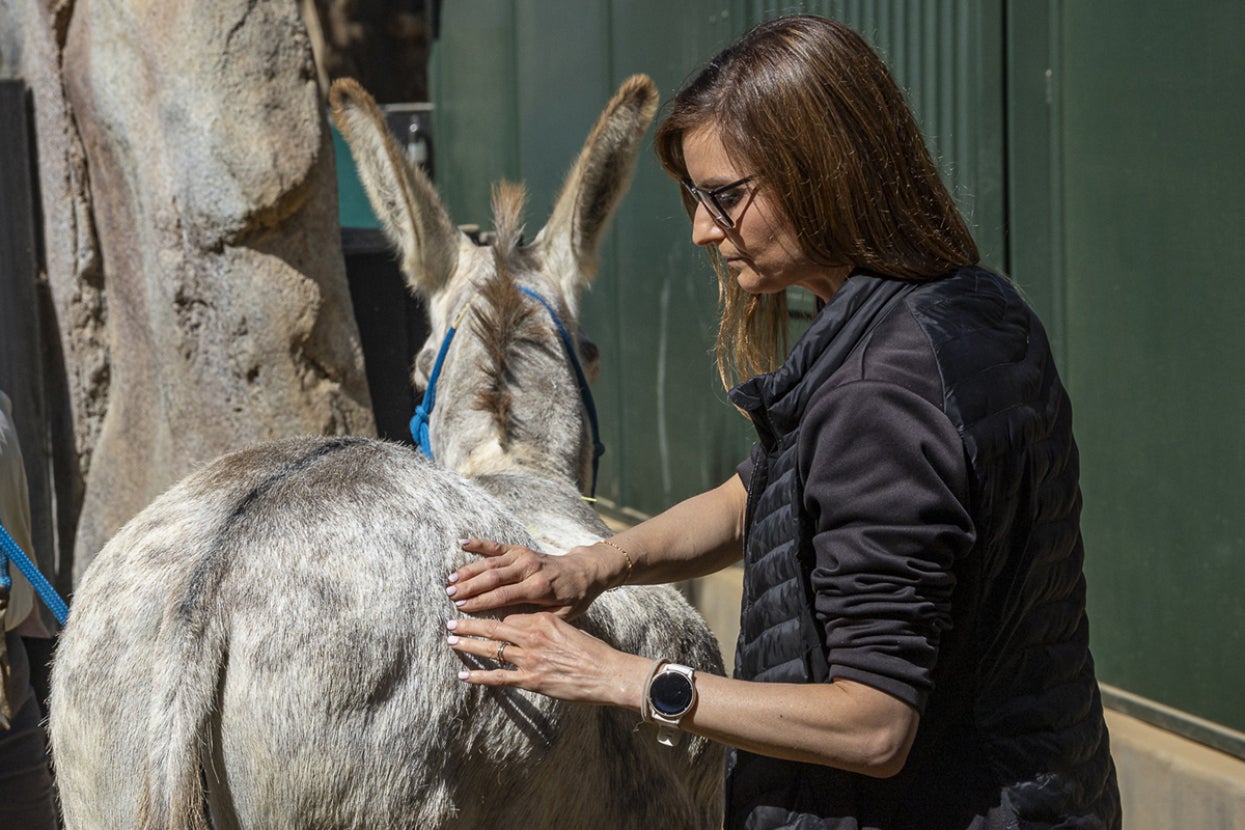
Despite Balboa’s muscle loss caused by injury, Dr. Gabby relies on her years of training and experience to know precisely where to place the acupuncture needles.
A History of Healing
For her first stop of the day, she and a hospital team member zip across the Zoo on a golf cart, catching up as they pass by early-morning Zoo guests. Dr. Gabby is greeted at their destination by the wildlife experts that care for Balboa, a burro near Elephant Odyssey. Balboa has naturally occurring distortions in his feet and gait pattern that cause tight hamstrings and a loss in muscle tone, affecting his ability to move easily.
Though Dr. Gabby is more likely to encounter a dog or cat at her primary practice, Balboa’s symptoms are surprisingly common across the animals she treats, and so is the treatment. She removes a case of small acupuncture needles from her bag and delicately inserts them into his back, hip, and shoulder.
Just like in human acupuncture, the needles don’t cause any pain. In fact, it’s quite the opposite: they block the pain signals that the patient’s nerves are sending to their brain. The needles also trigger the release of pain-relieving endorphins and other chemicals, and together treatment can alleviate inflammation, stiffness, nausea, allergic reactions, and more.
Eastern medicine has long since employed acupuncture to treat a wide variety of ailments for these reasons, and it’s why more practitioners of Western medicine, sports medicine—and wildlife medicine—are integrating it into their work. The hospital veterinary team utilizes their decades of experience and training to care for every individual at the Zoo every day, and their inclusion of acupuncture into their comprehensive care plans has made new kinds of progress possible.
The influx of relief and positive physiological responses allows Balboa’s nerves to reset, and this reset is what provides relief not just during treatment, but long afterward. This, combined with the veterinary team’s other therapy treatments, such as stretching and massage, can create lasting change for the wildlife Dr. Gabby helps care for with this holistic practice.
The results are immediate and undeniable. After less than 10 minutes of treatment, Balboa’s flexibility and energy increase, and he begins bounding about his habitat once again. The team smiles as they thank Dr. Gabby and continue their attentive daily work with him, watching as he heads out for a cool drink of water.
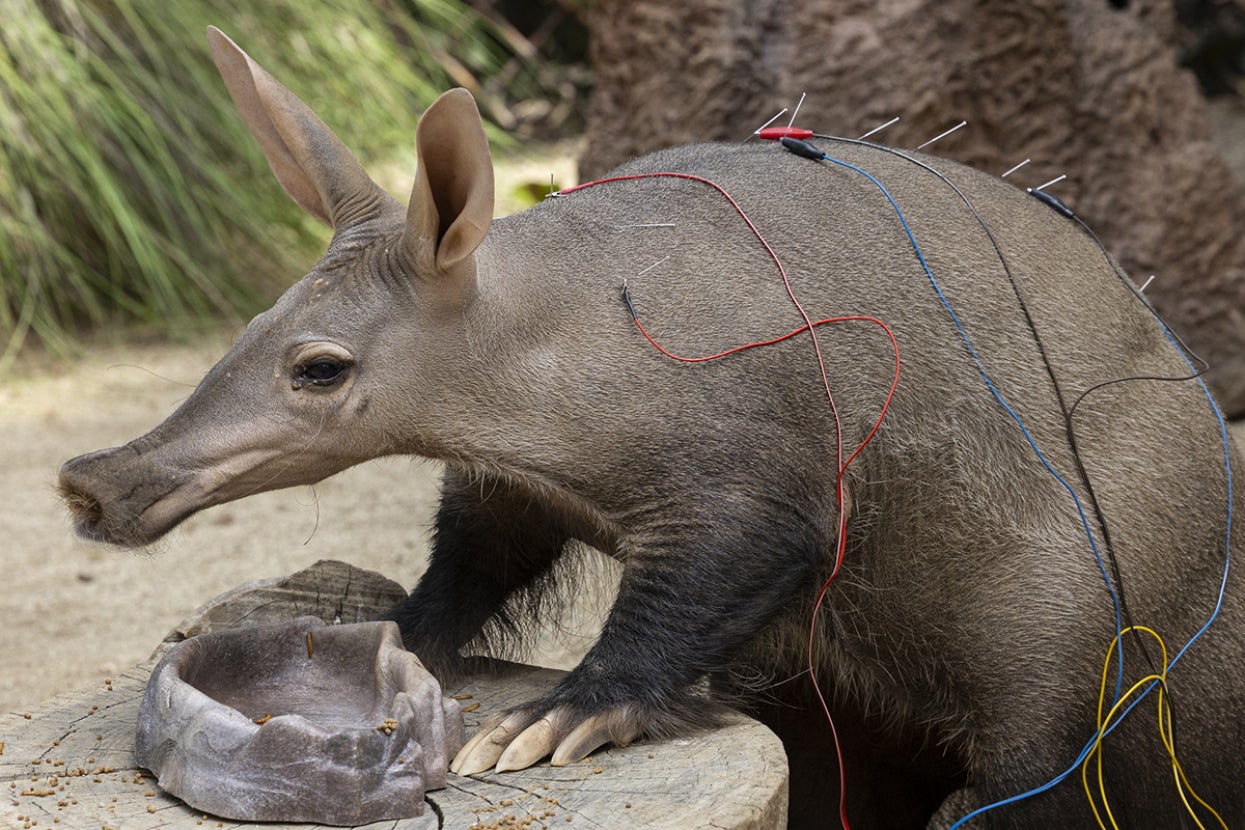
Zola’s care and veterinary teams combine electroacupuncture with physical therapy and even laser therapy to alleviate his neck and foot pain.
Clear Results
As Dr. Gabby jumps in the cart and heads over to her next patient, she explains how she began practicing this mode of treatment. “I wanted to do acupuncture and rehab before I even went to vet school, when I worked at a clinic that offered those opportunities. So after vet school, I got my certifications, then did my residency. Altogether, it was 11 years of training.”
She pulls up to the base of Conrad Prebys Africa Rocks to visit her next patients, two members of the wildlife ambassadors program that engage guests at the Zoo. First up is Zola, an aardvark that has experienced neck stiffness ever since an injury she sustained in her youth. Because the body is interconnected and naturally compensates for an injury, the neck pain has also led to a limp in her left front foot.
After consulting with the on-site care team, and guided by recommendations from the hospital’s experts, Dr. Gabby pulls out a fresh pack of acupuncture needles, which Zola accepts willingly. As part of our outcome-based care philosophy, all wildlife participate in their own care, ensuring treatment is a calm and beneficial experience.
As she inserts the needles, Dr. Gabby also pulls from her a bag a small electrical unit. She clips the thin wires to the needles as she inserts them into Zola’s skin, and they send small, harmless currents to Zola’s nerves. Dr. Gabby explains that electroacupuncture amplifies the benefits of the treatment, blocking more pain signals and stimulating more endorphins, leading to longer-lasting outcomes. Zola’s care specialist testifies to this, saying, “We see a huge improvement the next day. She moves around well, she can climb without a problem. We really don’t see evidence of the injury.”
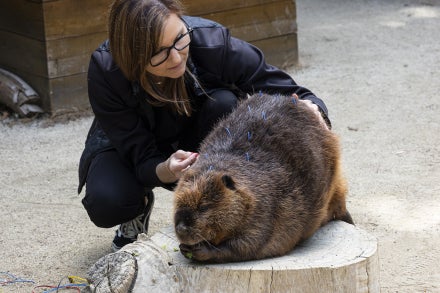
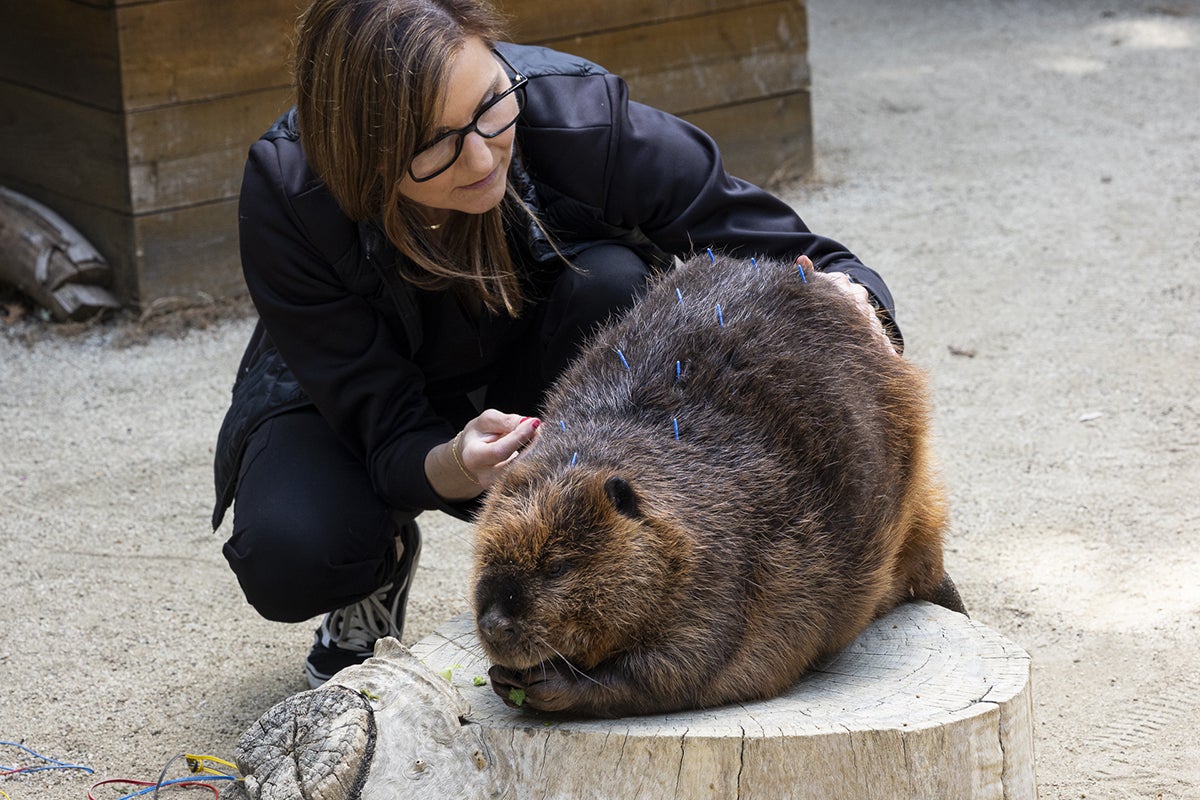
As Zola heads back to her habitat, a 14-year-old North American beaver named Peanut greets Dr. Gabby. Acupuncture is a common treatment for geriatric individuals, both animals and humans, as it can alleviate arthritis and other age-related conditions. For Peanut, who has arthritic hips and ankles, just five minutes allows her to release her muscles, move more spryly—and, as her care specialists note, poop more regularly, the true sign of the treatment’s success.
Beavers in native habitat typically live between eight and ten years, so the comprehensive care we offer Peanut is keenly evident as she closes in on her 15th birthday.
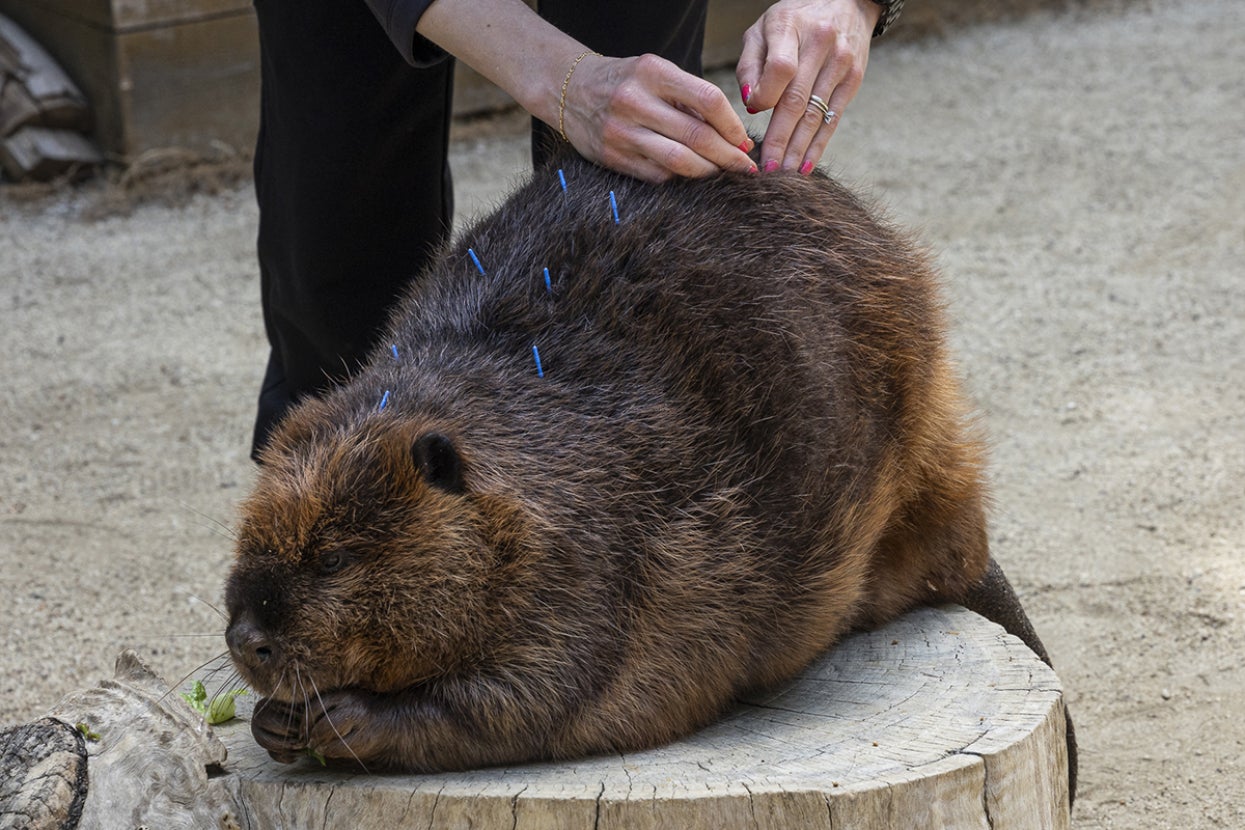
Despite Peanut’s exceptionally dense fur, acupuncture needles are able to make their way to the skin for treatment.
A Plethora of Patients
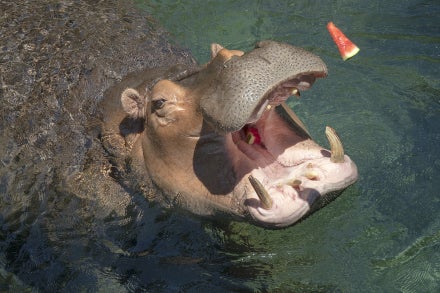
Wildlife acupuncture isn’t restricted to just mammals. As she heads to the Klauber-Shaw Reptile House, Dr. Gabby lists the many species she’s cared for during her tenure at the Zoo: in addition to a lion, hippo, wallaby, and capybara, she’s also treated a Jamaican iguana and Gramma the Galápagos tortoise, the beloved matriarch of the Zoo who lived to be 141 years old.
Dr. Gabby enters the hushed, shady habitat of the tuataras, where Purple, who was born with scoliosis, thrives among the leaves. The lizard-like reptile has been receiving acupuncture for about eight years, longer than any individual at the Zoo. Scoliosis is an abnormal and often painful curvature of the spine that, like other conditions Dr. Gabby treats, reduces movement and energy. With acupuncture and other treatments, Purple’s hunching has disappeared, proof of the long-term effects that are possible.
Nearby, a Chinese giant salamander is waiting. The water in the salamander’s habitat doesn’t faze Dr. Gabby, nor does the amphibian’s slick skin. Whether the individual is covered in fur, scales, or the salamander’s thin layer of mucus, the principles behind acupuncture are the same, and Dr. Gabby is able to adapt her treatment to each individual’s physiology and conditions.
For this salamander, that means scoliosis and a rotating rib. She came to the Zoo from a partner organization after being rescued from illegal wildlife traffickers. Under the attentive care of the hospital’s veterinary team, she was given a second chance at the Zoo. Until a year ago, there were no signs of discomfort, but wildlife care specialists began to notice her muscles tensing on one side, affecting her posture and, as a result, her behavior and appetite.
As conditions emerge over time, wildlife experts at the Zoo adapt comprehensive care plans accordingly, and this group asked Dr. Gabby to work with them to treat the salamander. They report she has been doing well, and after another round of acupuncture, she is more willing to move around her habitat and eat the variety of foods offered to her. The salamander is relatively young, in her 20s, and teams hope she will live for many more decades, a future that is possible thanks to supportive treatments like these.
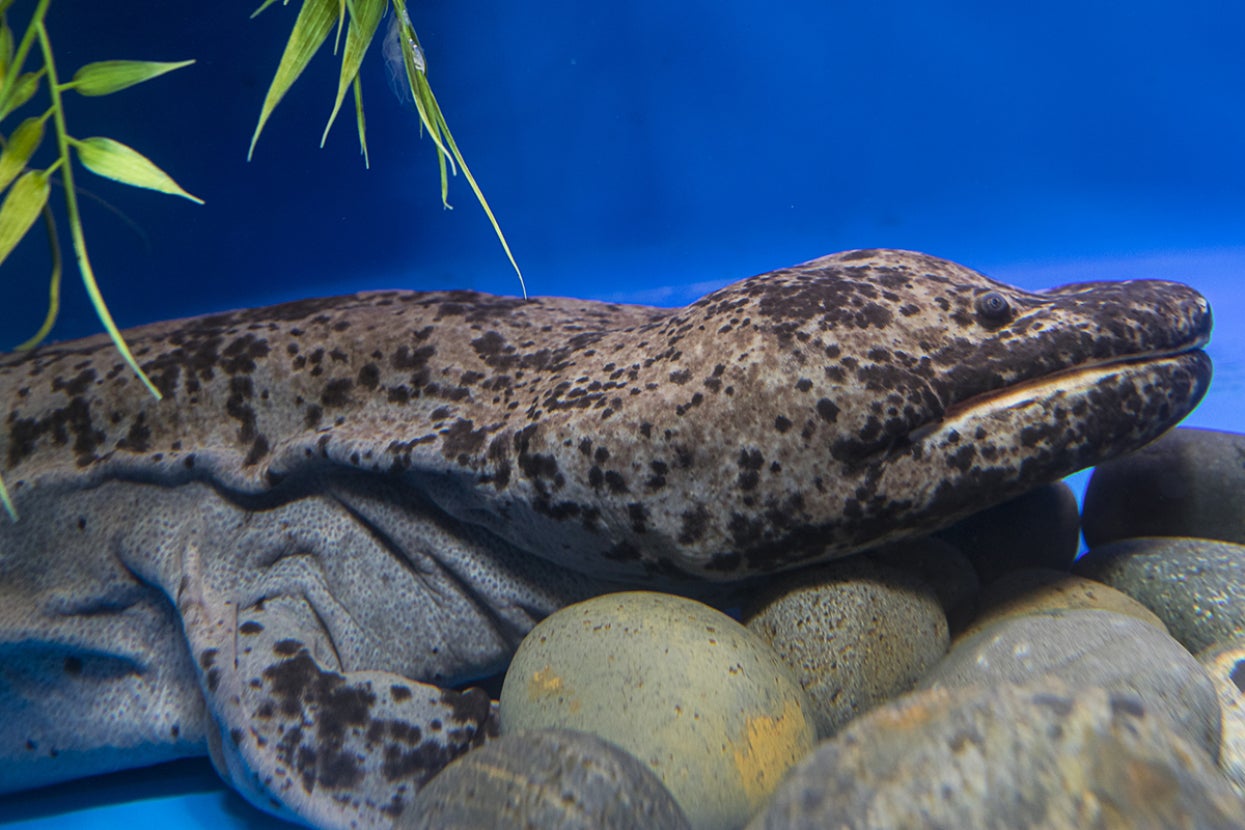
Acupuncture can be done in water, so critically endangered Chinese giant salamanders and other amphibians can benefit from the treatment.
The Care Continues
Though Dr. Gabby has been on-site for only a couple hours, she has been from one end of the Zoo’s 100 acres to the other, helping a myriad of species along the way. As specialized as acupuncture is, it’s increasingly common for zoos to integrate it into their veterinary practices, a sign that innovation will also have a place in wildlife care.
As the cart heads up the hill back toward the hospital, a call comes in on the walkie. It’s from the koala care team: a young female in the group is experiencing a hitch in her step caused by hip dysplasia, a common condition for a species that spends its days clinging to trees. They ask Dr. Gabby if she has time to swing by for a consultation.
“Of course,” she says, “we’ll be right there.” As they turn the cart around for one last visit, she leans forward slightly in her seat. “I’ve never worked with a koala before. I’m pretty stoked!” Her enthusiasm for care is what keeps her coming back to the Zoo, and in collaboration with world-renowned veterinary experts at the Zoo hospital, it’s what helps keep wildlife care at the Zoo top-notch.
A few minutes later they pull up to Australian Outback. Dr. Gabby heads inside, her bag in her hand, a confident grin on her face.